
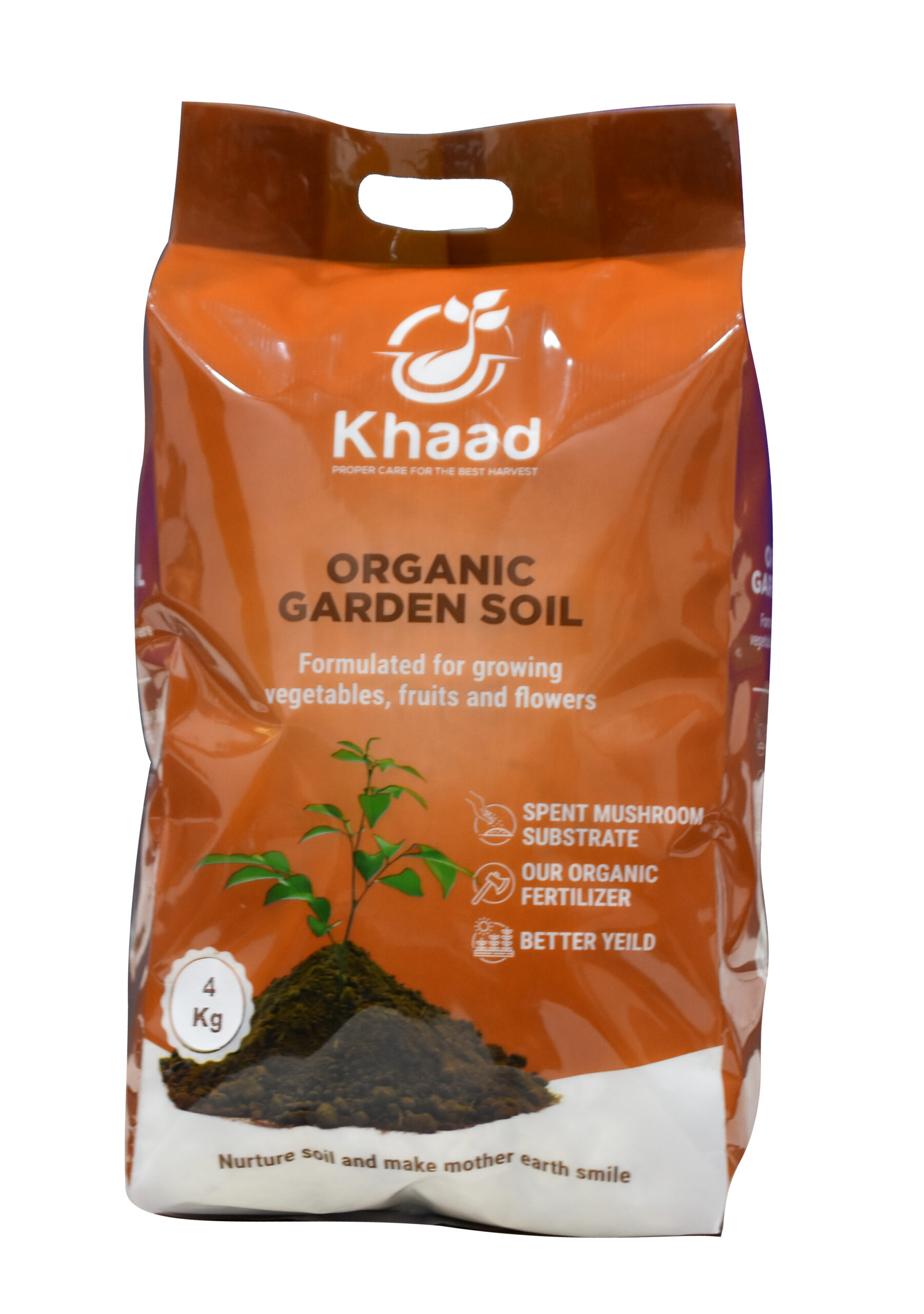
Spent mushroom compost (also called spent mushroom substrate or SMS) is the nutrient-rich growing medium left over after a mushroom harvest. Far from being a waste product, it is one of the most effective and sustainable organic fertilizers available to Indian gardeners and farmers — and it is the heart of every bag of Khaad Organic Garden Soil.
What is spent mushroom compost?
Mushrooms are farmed on a carefully prepared bed of composted agricultural material — typically wheat straw, gypsum and organic nitrogen sources. After one or two harvest cycles, the mushrooms have taken what they need, but the substrate remains loaded with decomposed organic matter, beneficial microbes and slow-release plant nutrients. Naturally matured and cured, this becomes spent mushroom compost: dark, crumbly, odour-free and ready to feed your soil.
Lab-tested nutrient values
Khaad publishes the lab results of its spent mushroom compost on every pack:
| Nitrogen (N) | 1.16% |
| Phosphorus (P) | 62.31 mg/kg |
| Potassium (K) | 1,544.75 mg/kg |
| Organic Carbon | 5.19% |
Benefits of spent mushroom compost
✔Slow-release nutrition — feeds plants for weeks without the root burn risk of chemical fertilizers
✔Rebuilds soil structure — loosens hardened potting soil and improves aeration and drainage
✔Retains water — the straw-based organic matter holds moisture through hot Indian summers
✔100% odour-free and weed-free — the composting process destroys weed seeds and pathogens
✔Sustainable — recycles farm by-products into living soil instead of landfill
✔Safe for pets and kids — fully processed, clean and suitable for indoor use
How to use spent mushroom compost
- In pots: mix about 500 g into every 5 kg of soil or potting compost. For established pots, top-dress with 2–3 handfuls.
- In beds: blend into the top 6 inches of soil two weeks before planting.
- Water generously after every application to activate the microbes.
- Reapply every 2–4 weeks during the growing season.
Spent mushroom compost vs other organic khaad
Compared with vermicompost and cow dung manure, spent mushroom compost is the all-rounder: it matches vermicompost on cleanliness and root safety while adding the soil-bulking, water-holding structure of gobar ki khaad — typically at a lower price per kilogram. For a full comparison of every option available to Indian home gardeners, read our organic khaad buying guide. And if your pots have already gone rock-hard, follow our step-by-step guide to reviving hardened potting soil.
Frequently asked questions
Is spent mushroom compost good for all plants?
It suits the vast majority of vegetables, flowers, fruits and ornamentals — especially tomatoes, cucumbers, broccoli, cauliflower, peppers, spinach and tulips. Acid-loving plants like blueberries and azaleas prefer lower-pH mixes, so use it sparingly for those.
Can I use spent mushroom compost for indoor plants?
Yes. Properly matured spent mushroom compost is completely odour-free and pathogen-free, making it ideal for indoor pots, balconies and terraces — and safe around pets and children.
Where can I buy spent mushroom compost in India?
Khaad ships lab-tested, naturally matured spent mushroom compost anywhere in India — ₹349 for a 4 kg pack with free delivery in 5–7 days, direct from our own mushroom farm in West Bengal.
Khaad Organic Garden Soil — lab-tested, odour-free, pet and kid safe. ₹349 for 4 kg, free shipping across India.
Shop Now